



The New Economics of Experiential Events
The New Economics of Experiential Events: How Brands Can Measure the ROI of Live Experiences
For many years, live events were judged by relatively straightforward measures: attendance, satisfaction surveys and whether the event achieved its immediate objectives. But as businesses invest more heavily in experiential marketing and face-to-face engagement, expectations are changing.
Today, an event is no longer simply an occasion. It is an investment in relationships, reputation, customer experience and brand performance.
That raises an increasingly important question for brands and event professionals: how should the return on a live experience actually be measured?

From event cost to business investment
The first step is to change the way an event is viewed internally.
A conference, product launch, client experience or brand activation may appear on a marketing budget as a significant cost. Yet its impact can extend far beyond the event itself. A successful experience can generate new business opportunities, strengthen client relationships, increase brand awareness, create content, influence purchasing decisions and improve employee engagement.
The true return therefore cannot always be captured by comparing the event budget with immediate sales.
Instead, organisations should consider the broader commercial and strategic outcomes an experience is designed to create.
Start with the objective, not the venue
Effective measurement begins long before guests arrive.
Every event should have a clearly defined purpose. Is the objective to generate qualified leads? Launch a product? Deepen relationships with existing clients? Strengthen employee engagement? Change perceptions of a brand? Some or all of the above?
Once the objective hierarchy is established, appropriate measures can be identified.
For a product launch, this hierarchy might include media coverage, product enquiries, demonstrations completed and subsequent sales activity. For a client event, relationship quality, opportunities generated and client retention may be more relevant. For an employee experience, participation, engagement and subsequent feedback could provide more meaningful measures.
The principle is simple: measure what the event is intended to achieve.

A practical framework for measuring event ROI
A useful approach is to evaluate an experiential event across four levels: reach, engagement, commercial impact and longer-term value.
1. Reach: Who did the event influence?
Start with the size and quality of the audience.
Measure:
- Number of attendees
- Target audience attendance rate
- Seniority or relevance of attendees
- Media attendance and coverage
- Social and digital reach
- Content views and shares
The important distinction is between quantity and quality. Reaching 1,000 people may be less valuable than engaging 100 highly relevant decision-makers.
2. Engagement: What did people actually do?
Attendance does not necessarily mean engagement. Look at the actions guests took during and immediately after the experience.
Useful measures include:
- Session or activity participation
- Product demonstrations
- Conversations or meetings generated
- Content interactions
- Survey responses
- Social posts and mentions
For experiential campaigns, this can reveal whether the event genuinely captured attention rather than simply attracting footfall.
3. Commercial impact: What business did it generate?
This is where event activity should connect directly with wider marketing and sales systems.
Track:
- Qualified leads generated
- Follow-up meetings booked
- Sales opportunities created
- Pipeline value influenced
- New customers acquired
- Revenue attributed to the event
- Cost per lead or acquisition
Where possible, event attendees should be tagged within the CRM system so that subsequent interactions and sales activity can be tracked.
A simple calculation can then be applied:
Event ROI = (Incremental revenue attributable to the event − total event cost) ÷ total event cost × 100
For example, if an event costs £50,000 and subsequently generates £125,000 in attributable incremental revenue, the ROI would be 150%.
Not every event will produce such a straightforward calculation, but establishing an attribution methodology before the event makes the eventual assessment considerably more robust.
4. Longer-term value: What changed afterwards?
Some of the most valuable outcomes of live experiences cannot be measured immediately.
Track results over the following weeks and months, including:
- Client retention
- Repeat purchases
- Increased customer spend
- Brand perception
- Employee engagement
- Media opportunities
- Partnership development
- Organic content and social reach
- Longer-term sales pipeline
This is particularly important for relationship-led events, where the commercial value of a stronger client relationship may emerge long after the event itself.


The venue is part of the return
There is another factor that deserves greater attention: the environment in which an experience takes place.
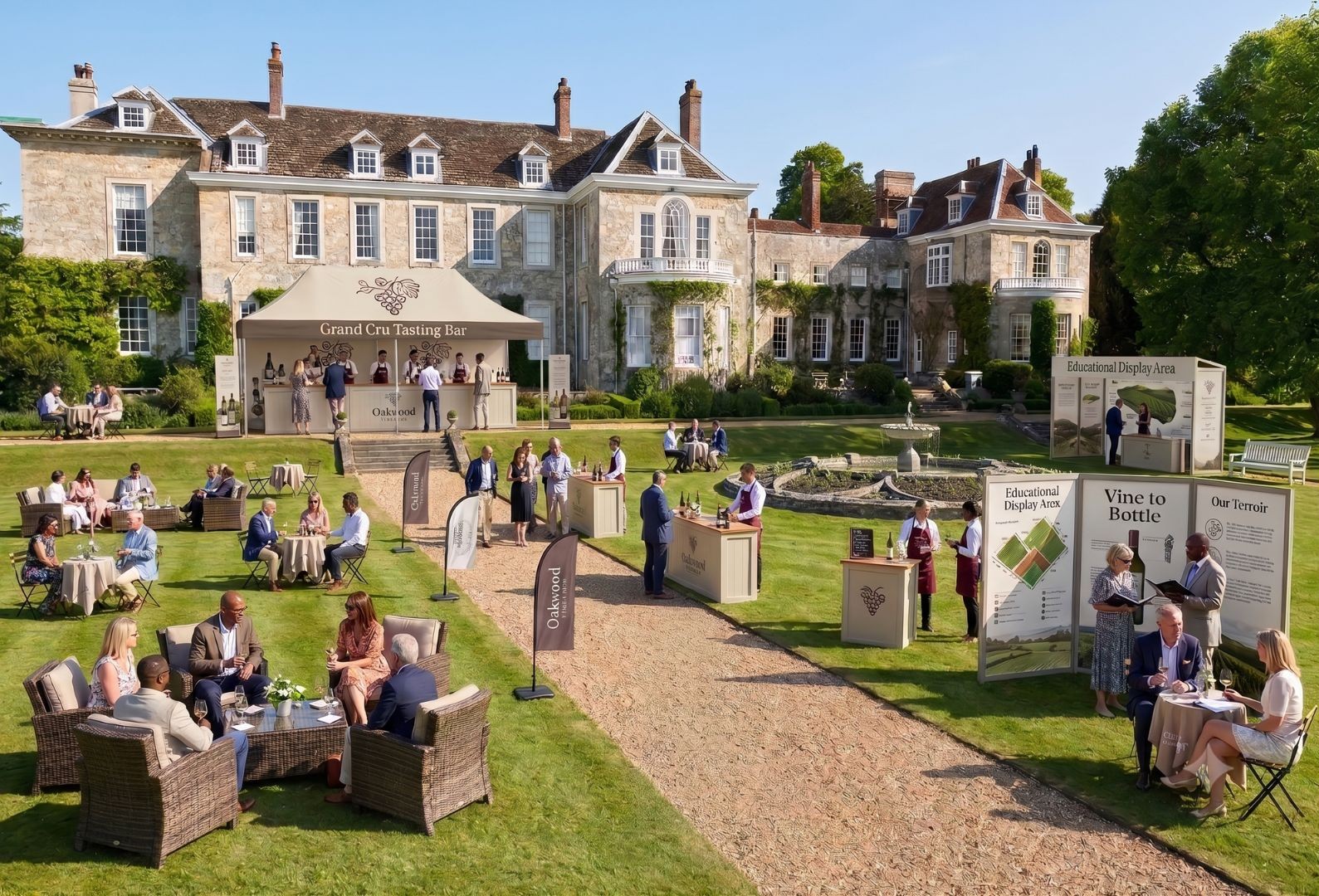
A venue is not simply a logistical container for an event. Its architecture, atmosphere, location and character can influence how guests feel, behave and remember the experience.
This is particularly important for brands operating in premium markets. A distinctive environment can communicate quality and values before a presentation has even begun.
At Firle, for example, events can take place across historic interiors, the Georgian Riding School, formal gardens, 300 acres of parkland and/or a range of ancillary buildings and dedicated private roads and trails. This allows an event programme to extend beyond a conventional meeting or reception and become a more immersive experience.
The setting can therefore become part of the storytelling, rather than simply the backdrop.
Measure the Experience (not just the transaction)
Not every return from an experiential event can be attributed immediately to a transaction.
A client leaves with a stronger connection to a brand. Prospective customers develop greater confidence in a product. Employees feel more connected to their organisation. A journalist encounters a brand in an environment that changes their perception of it.
These effects may take weeks or months to translate into measurable commercial outcomes.
This is why post-event measurement is so important. Follow-up surveys, CRM tracking, sales attribution, social listening and subsequent customer behaviour can help reveal the longer-term impact of an experience.

The Future of Event ROI
The most sophisticated brands are moving towards a broader definition of return: not simply what happened on the day, but what changed because the event happened.
That shift has important implications for event organisers. Creating an exceptional experience is no longer just about delivering impressive production or filling a room. It is about designing an environment and programme around clearly defined business outcomes.
The most effective experiential events combine emotional impact with commercial purpose.
When a live experience creates meaningful connections, strengthens brand perception, generates opportunities and remains memorable long after guests have departed, its value extends far beyond the original event budget.
For brands seeking to make greater impact through live experiences, the question is therefore no longer simply “How much will the event cost?”
It is:
“What will this experience achieve for our business?”