



The Masterpieces at Firle – Part One
The collection at Firle Place offers a compelling window into the artistic, political, and social currents of early modern Europe. Among its treasures are three remarkable paintings, each distinct in subject yet united by their ability to capture both individual identity and broader historical context with striking clarity and emotional resonance.
In this article, we take a look at three of the most important works of art that visitors to Firle Place and event attendees will have the opportunity to view.
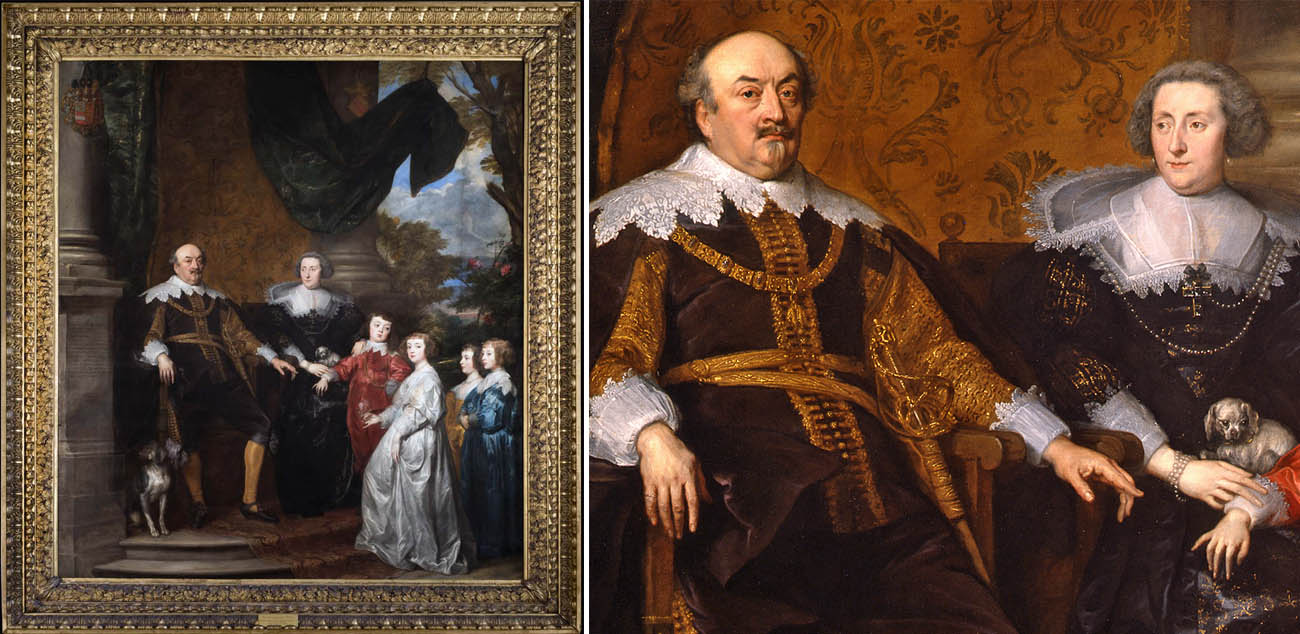
Count John of Nassau-Siegen and his Family
Sir Anthony Van Dyck (1599-1641)
Sir Anthony Van Dyck’s Count John of Nassau-Siegen and his Family (1634) stands as an epic testament to power, allegiance, and dynastic pride. Painted during the artist’s brief return to Brussels, the work reflects both Van Dyck’s refined courtly style and the political complexities of its sitter.
Count John, once aligned with the Dutch revolt, had by this time shifted loyalty to the Spanish crown, a transformation symbolised by the prestigious Order of the Golden Fleece worn prominently across his chest. He is accompanied by his wife, Ernestina Yolanda, and their four children, all arranged in a composition that balances grandeur with intimacy.
The painting conveys not only status but also cohesion, presenting the family as a unified and dignified entity. Its later journey—from presumed installation in Siegen Castle to its rediscovery and preservation through successive generations—adds a layer of historical poignancy, underscoring the endurance of lineage and memory embedded within the canvas.
Extensive Landscape with a Windmill
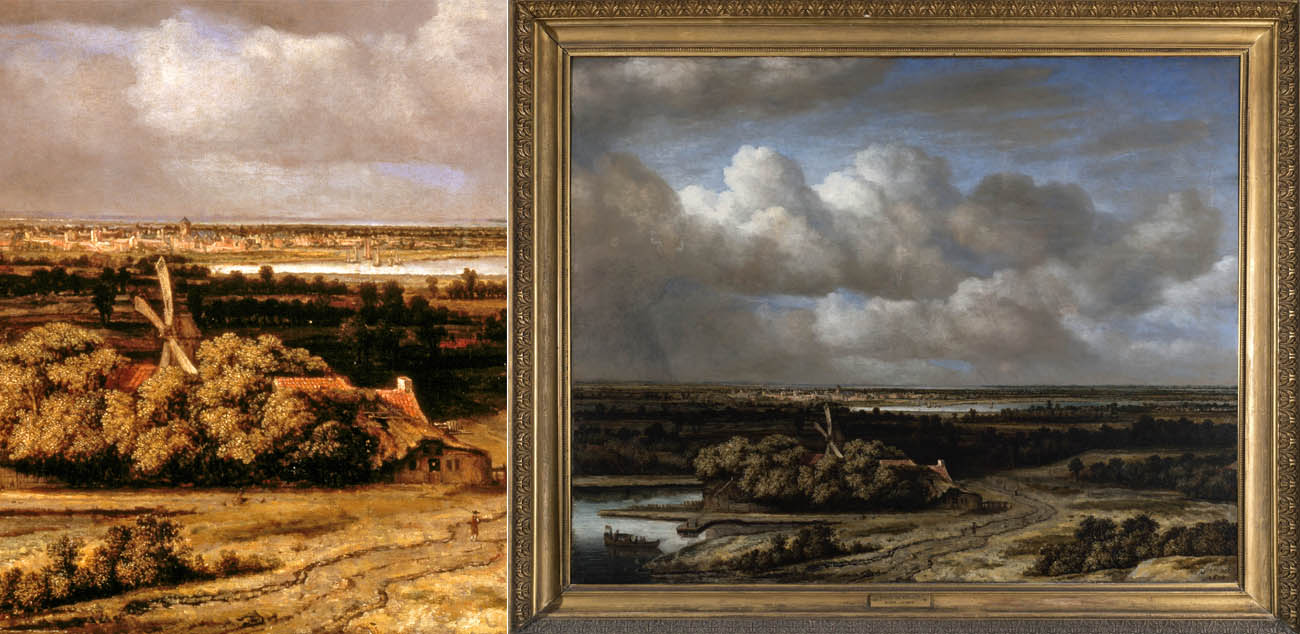
Philips de Koninck (1619-1688)
Equally evocative, though markedly different in tone, is Philips de Koninck’s Extensive Landscape with a Windmill (1655). Here, the focus shifts from human presence to the vastness of the natural world. De Koninck masterfully renders a sweeping Dutch landscape, where the horizon stretches almost infinitely and the sky dominates the composition. The windmill, though modest in scale, anchors the scene and serves as a quiet symbol of human industry within an expansive environment.
The painting exemplifies the seventeenth-century Dutch fascination with light, atmosphere, and spatial depth, qualities that would later inspire generations of British landscape artists. Its provenance, passing from aristocratic collections to the Grenfell family and eventually to Firle, mirrors the movement of taste and cultural appreciation across time.
The work invites contemplation, drawing the viewer into a serene yet powerful meditation on scale, solitude, and the relationship between land and sky.
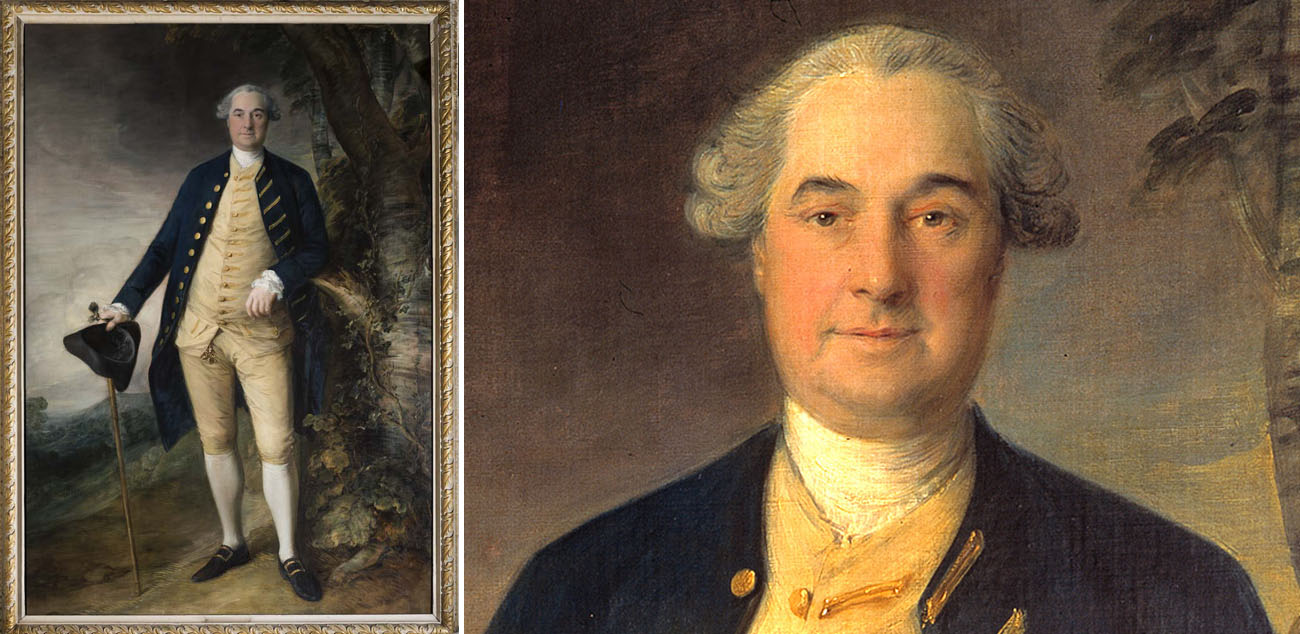
William Hall Gage, 2nd Viscount Gage
Thomas Gainsborough (1727-1788)
In contrast, Thomas Gainsborough’s William Hall Gage, 2nd Viscount Gage (1777) returns to portraiture, yet with a distinctly more personal and fluid approach. Painted in the artist’s mature period, the portrait situates its subject within a softly rendered landscape, blending figure and setting in harmonious unity.
Gainsborough’s light, feathery brushwork imbues the composition with a sense of movement and vitality, while the sitter’s relaxed pose and informal attire suggest both status and approachability. William Hall Gage, depicted in a semi-official uniform linked to his role as Paymaster of Pensions, embodies the intersection of political responsibility and personal identity.
Intriguingly, the painting reveals traces of revision. Evidence exists that Gainsborough originally included a ceremonial sword hanging on William’s left side, with a belt and blade that reached all the way almost to the ground, which he later removed, offering insight into the artist’s evolving vision. The result is a portrait that feels both composed and spontaneous, capturing not just likeness but character.
Together, these three works from Firle’s extensive collection of art, form a rich tapestry of artistic expression, each illuminating different facets of history, identity, and the enduring power of visual storytelling. Visitors to events at Firle Place will have the opportunity to enjoy the occasion alongside seeing some of the most important works of art in southern England.