



The Masterpieces at Firle – Part Two
The masterful paintings held at Firle Place continue to illuminate the intricate intersections of art, identity, and patronage across Europe. Three works in particular – by Domenico Puligo, Joshua Reynolds, and Johann Zoffany – offer distinct yet complementary perspectives on portraiture, each revealing not only the character of their sitters but also the cultural environments that shaped them.
In this article, we take a look at three more of the most important works of art that visitors to Firle Place and event attendees will have the opportunity to view.
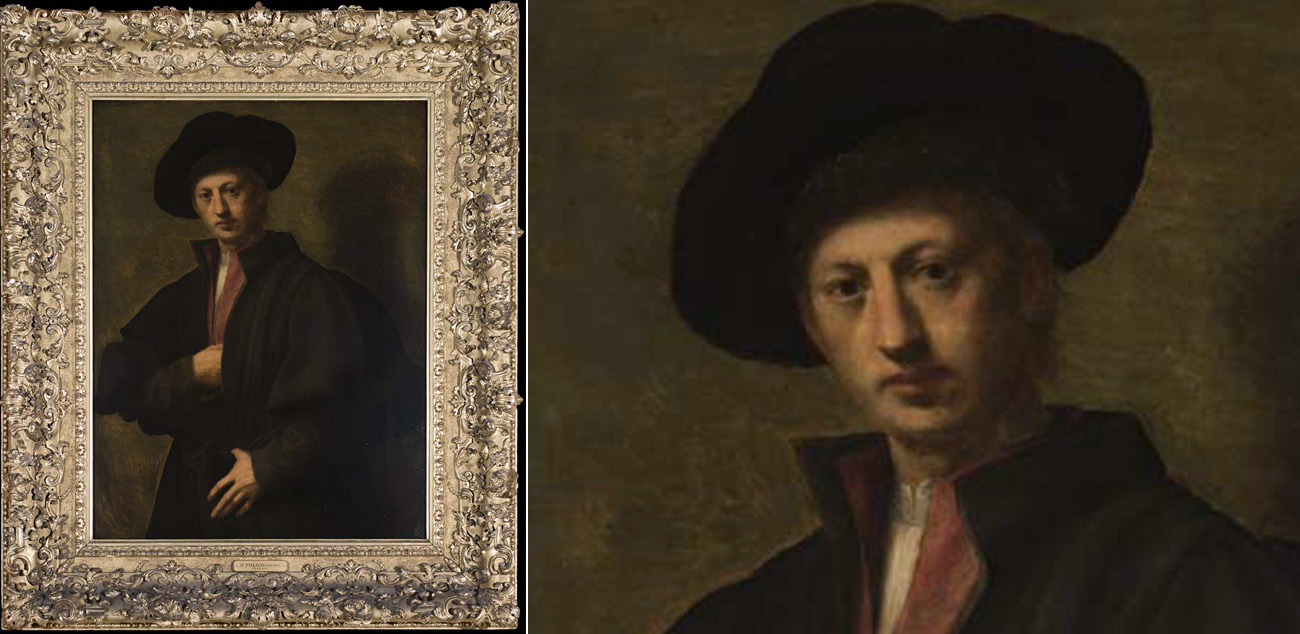
Portrait of a Man, called The Fattore of San Marco, Florence
Domenico Puligo (1492-1527)
Portrait of a Man, called The Fattore of San Marco, Florence by Puligo is a striking example of Renaissance portraiture at its most introspective. Though the sitter’s identity remains uncertain, he is widely believed to have been the Keeper of the Dominican convent of San Marco in Florence.
The painting’s power lies in its quiet restraint: the figure is presented with a directness that invites contemplation, his expression measured yet deeply human. Puligo’s subtle handling of light and texture lends the work a softness that enhances its psychological depth, positioning it among his finest achievements. Its later acquisition by George Nassau Clavering-Cowper reflects the discerning taste of a collector immersed in Florentine culture during the eighteenth century.
Having settled in Florence after his Grand Tour, Cowper developed a particular admiration for the second generation of Renaissance artists, and this portrait exemplifies the refined sensibility that defined his collection.
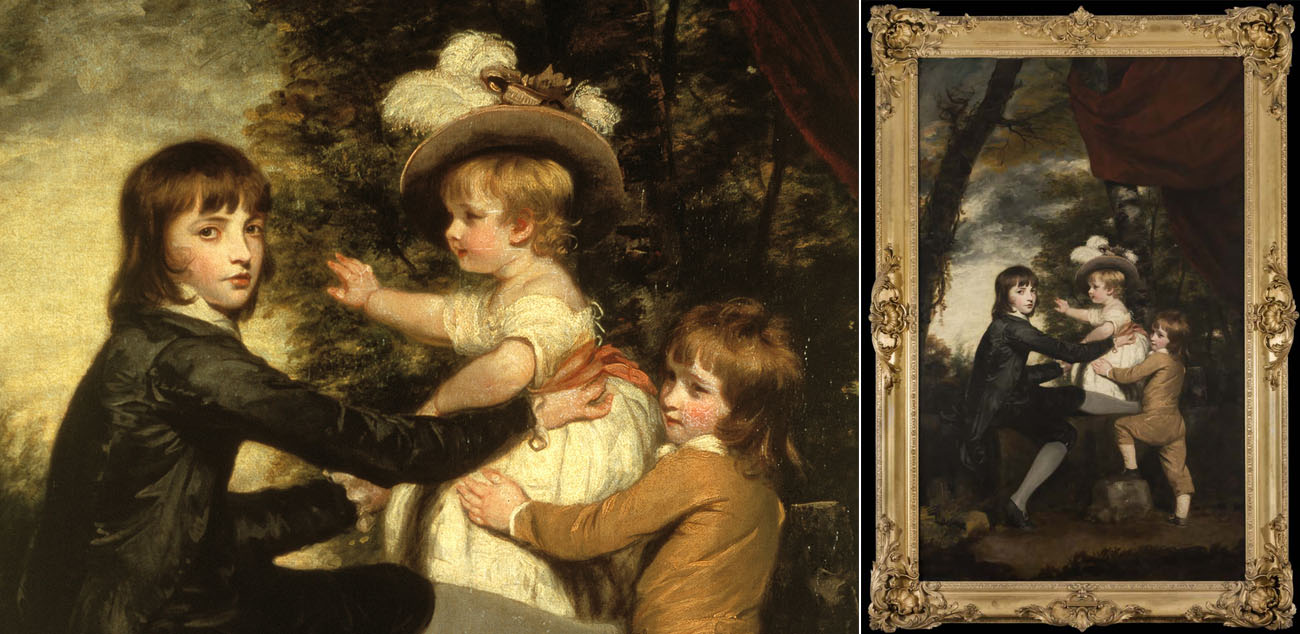
The Lamb Children
Sir Joshua Reynolds (1723-1792)
In contrast to Puligo’s work, The Lamb Children by Reynolds offers a vivid and emotionally layered depiction of childhood.
Commissioned in 1783 by Elizabeth, Viscountess Melbourne, the portrait captures her three sons – Peniston, William, and Frederick – each distinguished by their attire, which carefully denotes their respective stages of youth. Reynolds employs costume not merely as decoration but as narrative device: from the structured formality of Peniston’s Eton dress to the softness of Frederick’s infant garments, the painting becomes a study in growth and transition. Yet beneath its surface charm lies a more complex familial story. Intended as a companion piece to an earlier maternal portrait, it was ultimately rejected by Lord Melbourne, likely due to uncertainties surrounding the children’s paternity. This tension imbues the work with an undercurrent of unease, contrasting with its outward elegance.
Retained in the artist’s studio and later acquired by the Cowper family, the painting endures as both a masterful composition and a subtle reflection on legitimacy, identity, and social expectation.
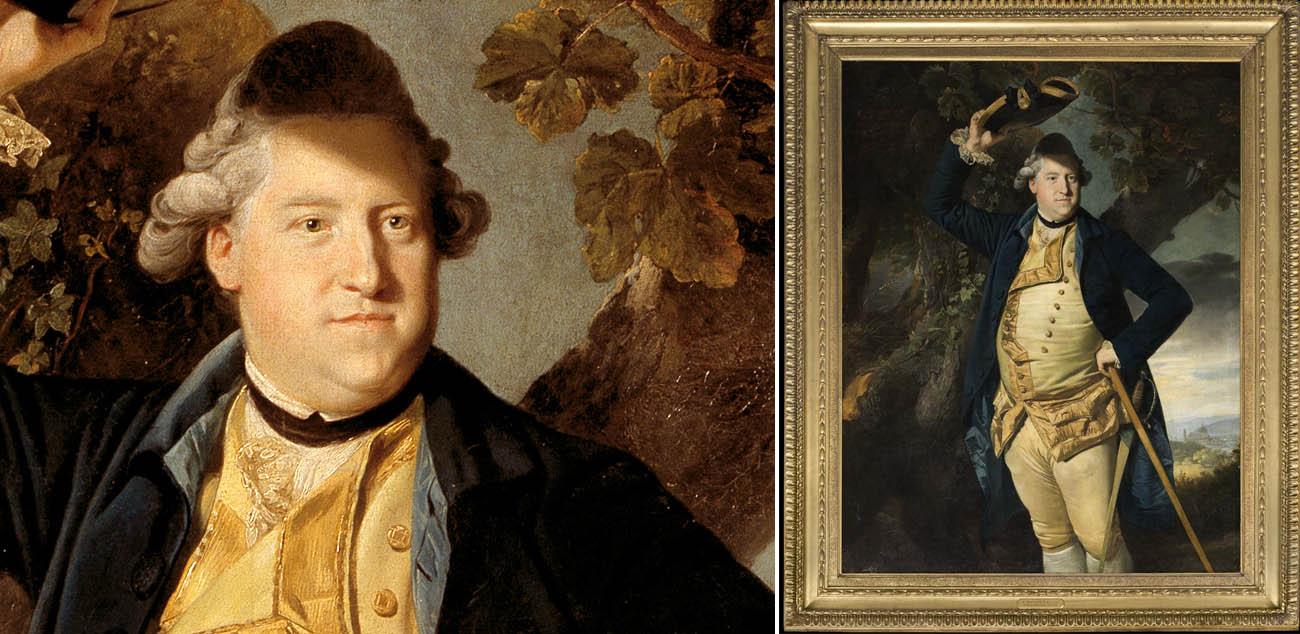
George Nassau Clavering-Cowper, 3rd Earl Cowper
Johann Zoffany (1733-1810)
Finally, George Nassau Clavering-Cowper, 3rd Earl Cowper by Zoffany presents a portrait of aristocratic confidence shaped by cosmopolitan influence.
Painted around 1773, the work depicts the Earl in the gardens of his villa at Fiesole, with the city of Florence unfolding in the distance. The setting is both personal and symbolic, situating the sitter within the cultural landscape he had come to inhabit so fully. Zoffany’s attention to detail is evident in the Earl’s attire: the finely cut coat, delicate lace, and gold-trimmed waistcoat all signal his engagement with Tuscan courtly life, while the inclusion of both sword and cane suggests a balance of elegance and authority. The raised hat, poised in greeting, introduces a sense of immediacy and charm, drawing the viewer into the scene. Their professional relationship extended beyond portraiture, with Zoffany serving as both mentor and advisor in the formation of Cowper’s collection.
This painting, paired with a companion portrait of the Earl’s fiancée, stands as a testament to artistic collaboration and the cultivated identity of a patron deeply embedded in European cultural exchange.
These three works reveal the richness of portraiture across centuries. Each offers a nuanced exploration of individuality, shaped by context, and preserved through the enduring vision of their creators. Visitors to events at Firle Place will have the opportunity to enjoy the occasion alongside seeing some of the most important works of art in southern England.