


How to Put Wellness at the Heart of Your Corporate Event
Designing corporate events that improve how people think, connect and perform
Wellness has become an established part of the corporate events conversation. The challenge for experienced event organisers is no longer whether to include it, but how to make it meaningful.
A yoga session at 7am, a smoothie station at lunchtime or a mindfulness workshop can all have value. But when wellness is treated as an isolated activity, it can easily become another item on an already crowded agenda.
The more interesting opportunity is to design the entire event around the conditions in which people perform at their best. And then provide the means for them to develop strategies to maintain that performance long after the event has finished.
That means thinking about the relationship between energy, concentration, movement, social connection, environment and recovery throughout the delegate journey.
Rather than adding wellness to an event, organisers can build wellness into the architecture of the programme itself.
-
The Psychology of the Delegate Journey
Before choosing a wellness activity, consider what delegates actually need at each stage of the event. A useful approach is to map the day according to four states:
Activate → Focus → Recover → Connect
The morning might be designed to activate delegates physically and mentally. The middle of the day might prioritise concentration. After an intensive session, delegates may benefit from recovery and decompression. Later, social experiences can help strengthen relationships.
The question for the organiser should therefore be: what do delegates need next?
That question is more useful than simply asking which wellness activity can be fitted into the agenda. This is because it enables you to design an event around the physical and cognitive demands placed on delegates.
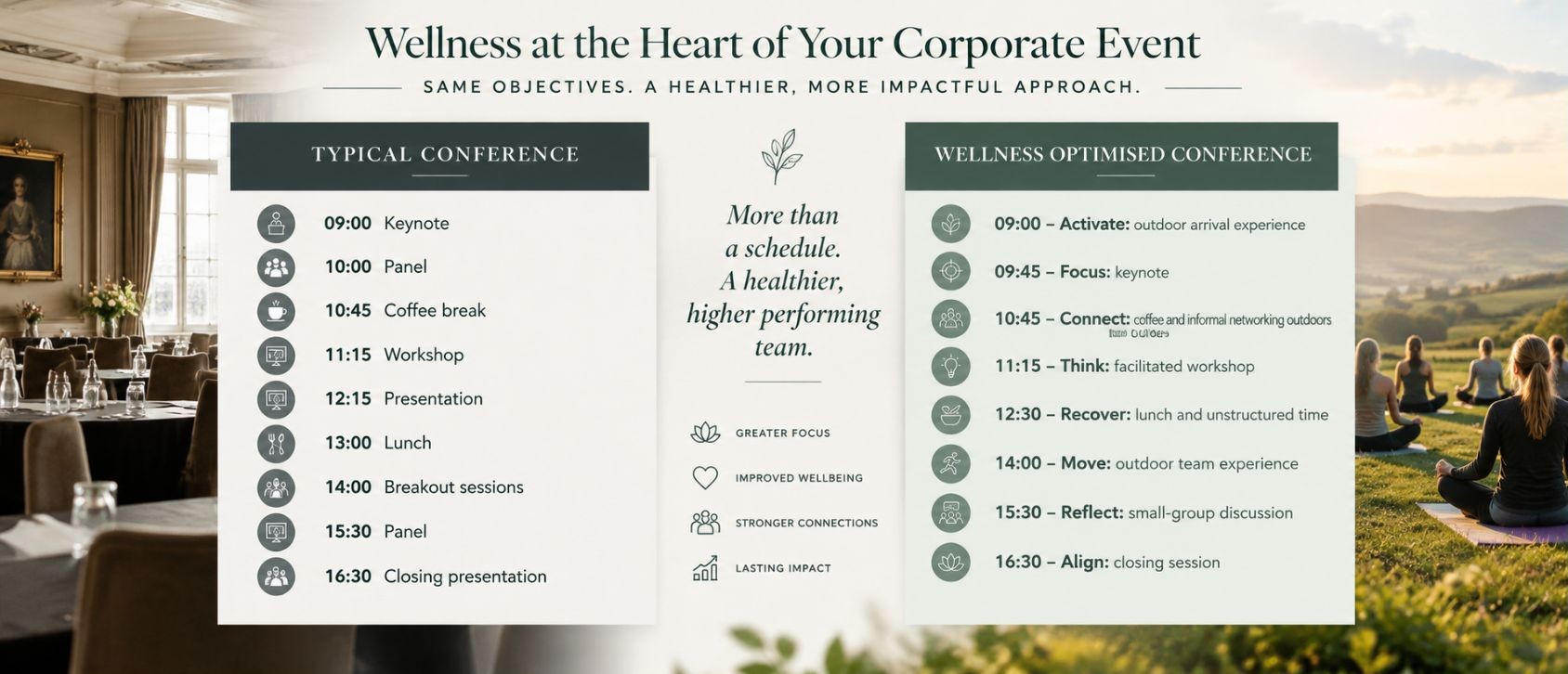
In the example above, the content hasn’t changed. The experience of consuming it has. This is one of the most powerful ways wellness can improve an event.
-
The Arrival Experience
The opening of an event establishes its rhythm. If delegates arrive, register, take a coffee and immediately sit beneath artificial lighting for a series of presentations, the event can begin in a relatively passive state.
A better approach can be to introduce movement and environmental change before the formal programme begins. This is sometimes known as The Arrival Experience.
Rather than asking delegates to go directly from car to conference room, The Arrival Experience takes attendees on a short, guided walk through an environment that inspires thought and creativity or simply serves to decompress them after their journey.
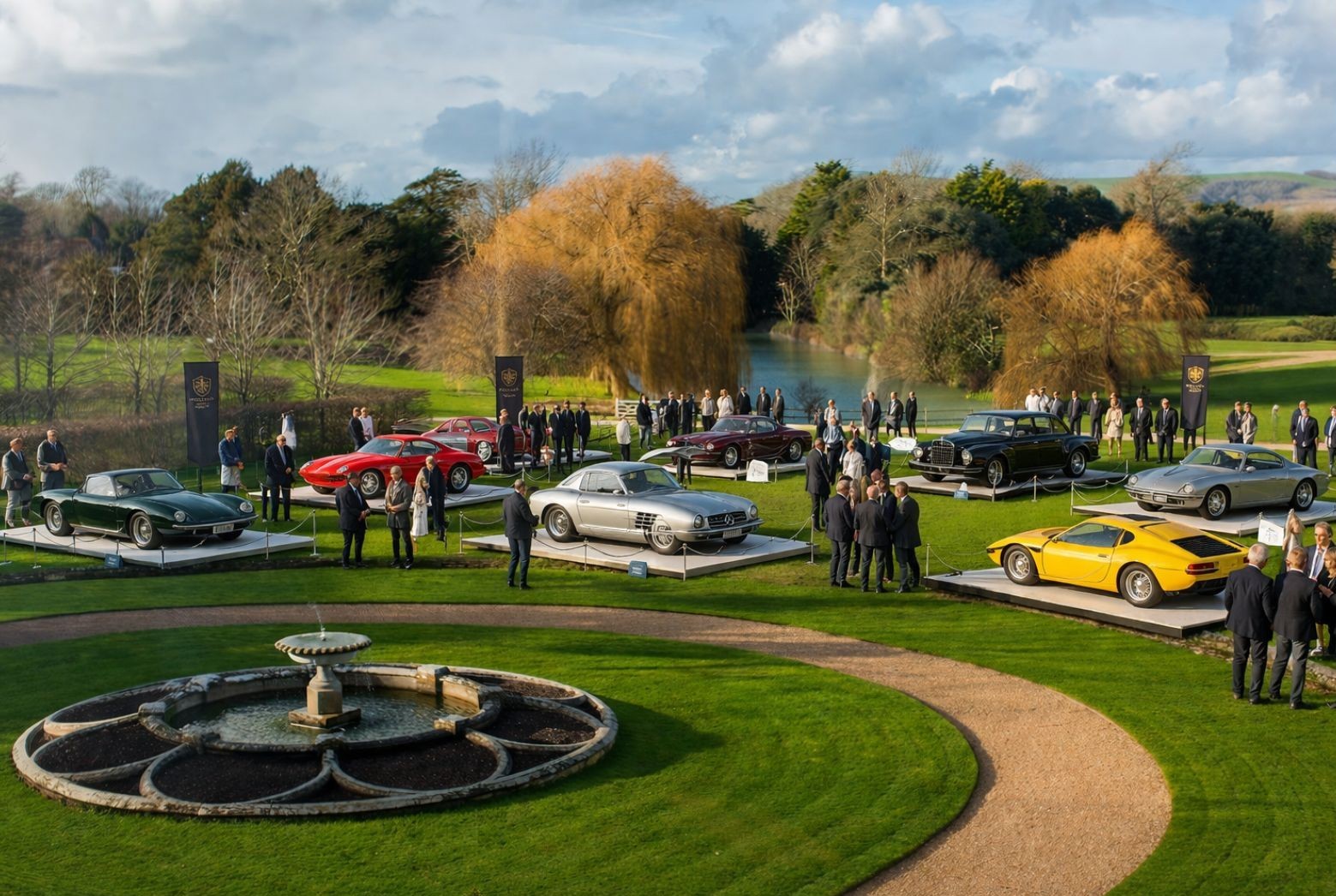
For a leadership group, the walk could be a walk through carefully selected location within the grounds of the venue, allowing people to reconnect after travelling. For a larger conference, it could become a guided tour through a display or exhibition with opportunities for learning and discovery along the way. Or if it is a smaller executive retreat, a facilitator could use the walk as the setting for a series of paired conversations.
The important distinction is that experience has a purpose. It is not exercise for exercise’s sake. It changes the physical and social context in which the event begins.
-
Movement at the Heart
Movement doesn’t have to end once the event programme starts. One of the most effective ways to embed wellness without making an event feel like a wellness retreat is to reconsider the meeting itself.
Not every conversation needs a boardroom, and movement can help to promote dynamic thinking as well as being good physically.
Walking meetings
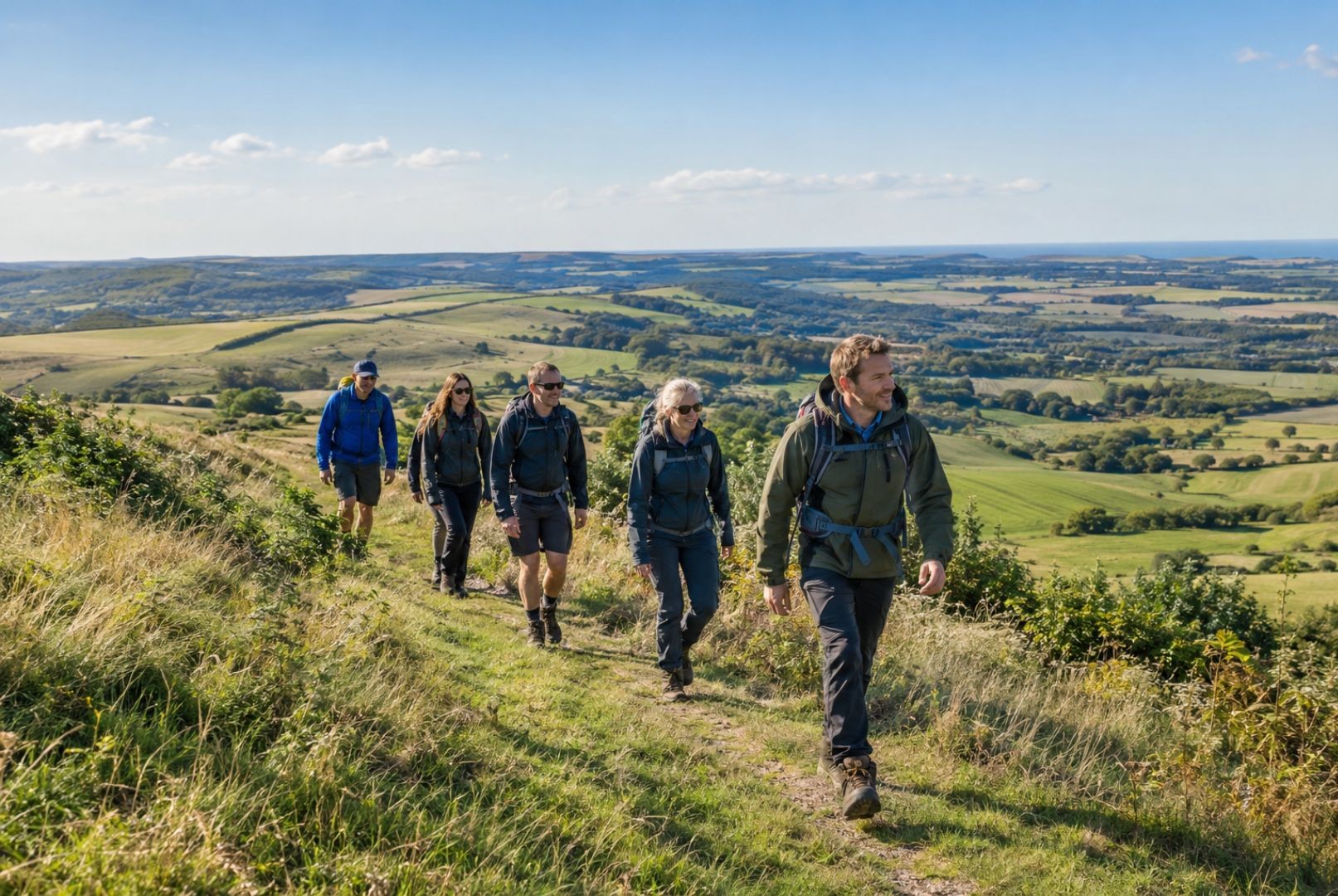
Walking meetings can work particularly well when the objective is dialogue rather than presentation. For example:
- one-to-one conversations
- mentoring
- creative problem-solving
- leadership discussions
- informal feedback
- post-workshop reflection
The key is to design the agenda around dedicated walking meetings/sessions, rather than attempting to insert a walk into the agenda afterwards.
-
Use Nature Strategically
Research shows that even relatively brief exposure to natural environments can have positive effects on mood, wellbeing and attitudes towards work, reinforcing the value of incorporating nature into working environments and breaks.
For event professionals, “bringing delegates into nature” should mean more than putting a few outdoor tables beside the conference room. The environment should be used to alter the intensity and character of an event programme and allow for periods of micro-recovery, while also increasing delegate engagement.
This can be done by:
- integrating product displays or marketing collateral into the landscape
- creating short, curated walking routes for break times
- offering quiet seating areas
- informal outdoor networking areas
- guided outdoor breathing or mindfulness sessions
- stretching sessions with trained instructor
- landscape photography or painting lessons
The absence of compulsory participation is important. Wellness becomes more credible when delegates are given agency and choice.
-
Activities for Outcome
Not all wellness activities deliver the same type of benefit.
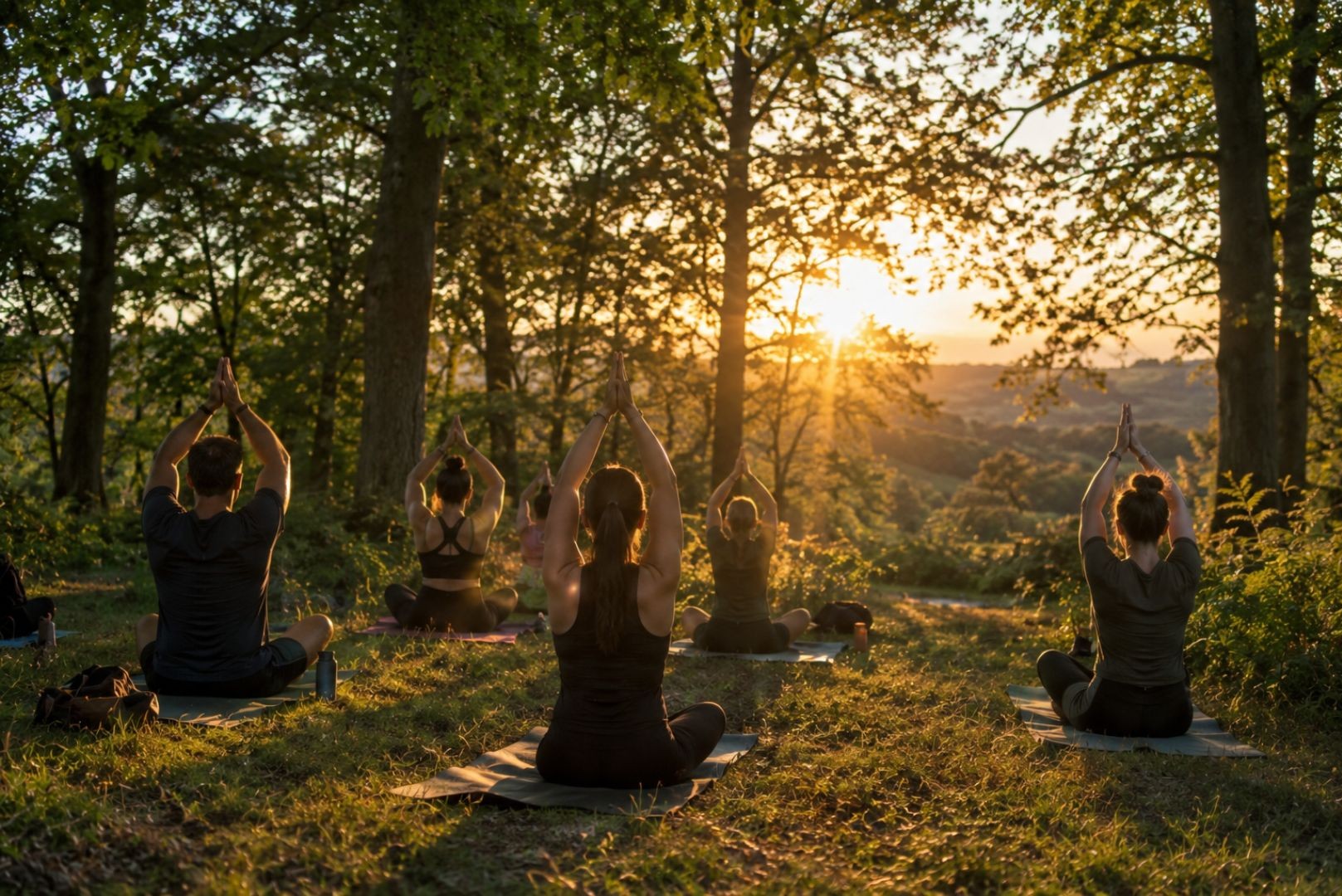
Yoga, Pilates, and meditation can promote relaxation and a sense of serenity and calm. This is extremely beneficial to all working professionals, but modern corporate events should include wellness principles and activities that are aligned to wider objectives.
For example, it is possible to embed wellness benefits into team-building activities. And so, a sophisticated corporate programme should therefore match the activity to the desired outcome.
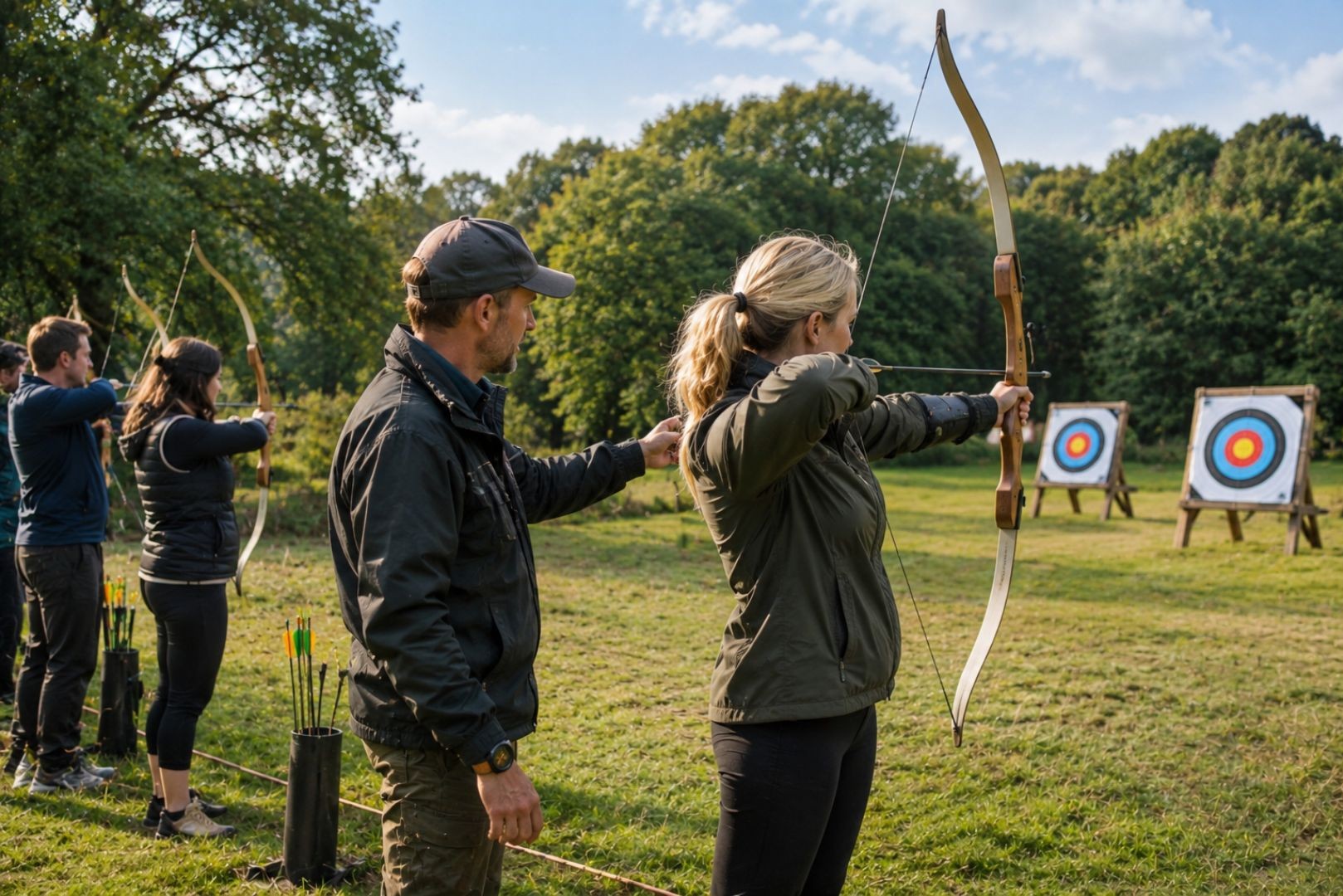
Archery: concentration and presence
Archery requires participants to slow down, control their breathing, focus on a target under pressure, and concentrate on deploying a newly learned technique. These are skills that are not only beneficial in most professional environments, they also possess significant wellness benefits.
It can work particularly well following a morning of intensive presentations, providing a very different cognitive experience before delegates return to the main programme.
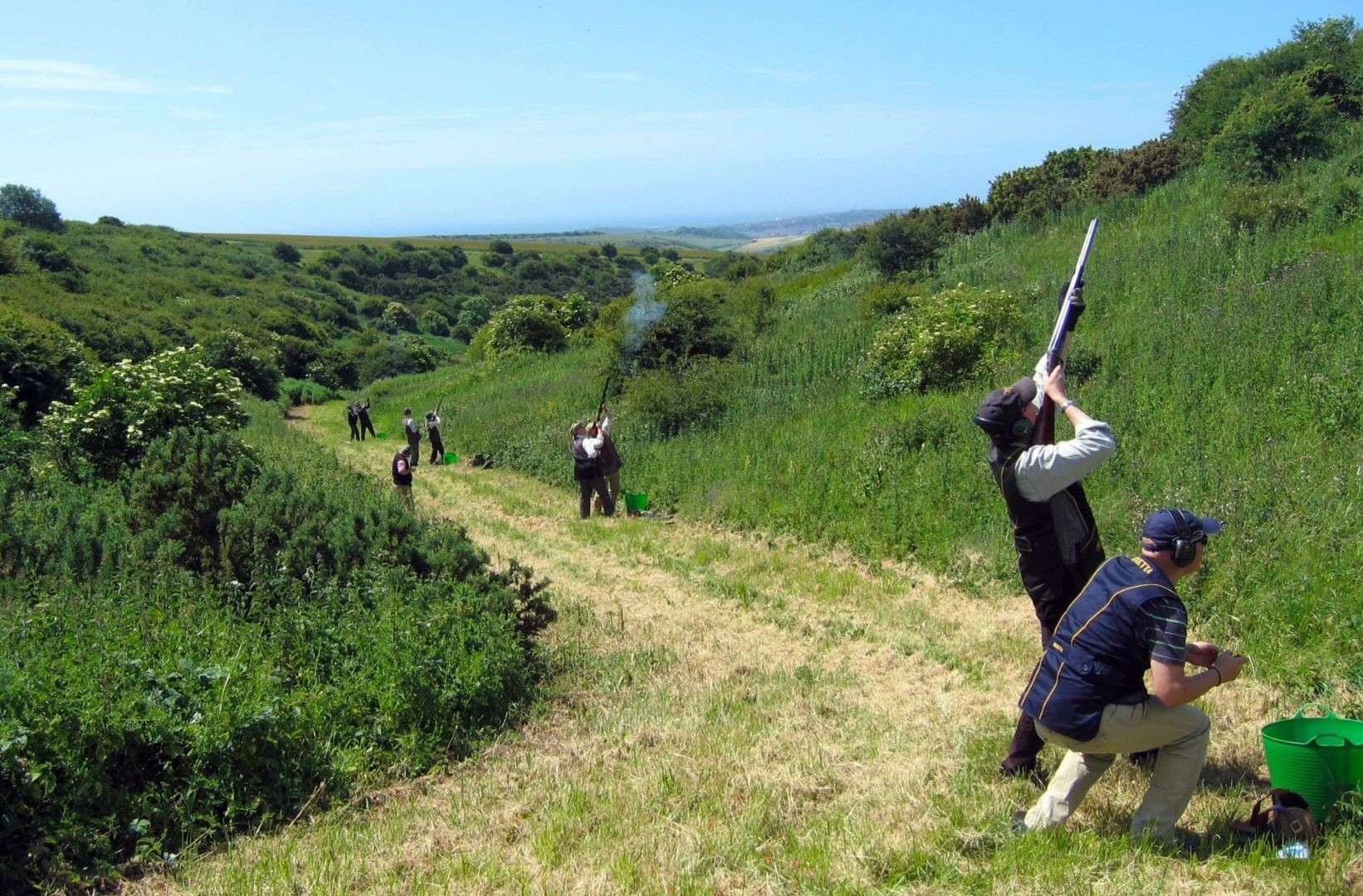
Simulated clay shooting: focus, composure and shared achievement
Simulated clay shooting provides another distinctive experience. The experience combines concentration, hand-eye coordination and adaptability with an inherently social format.
At Firle, participants move through different locations across the estate rather than remaining at a static shooting station. It can therefore work particularly well for incentive programmes, client entertaining and team experiences where the objective is shared achievement rather than conventional corporate team-building.
Hiking and cycling: decompression and conversation
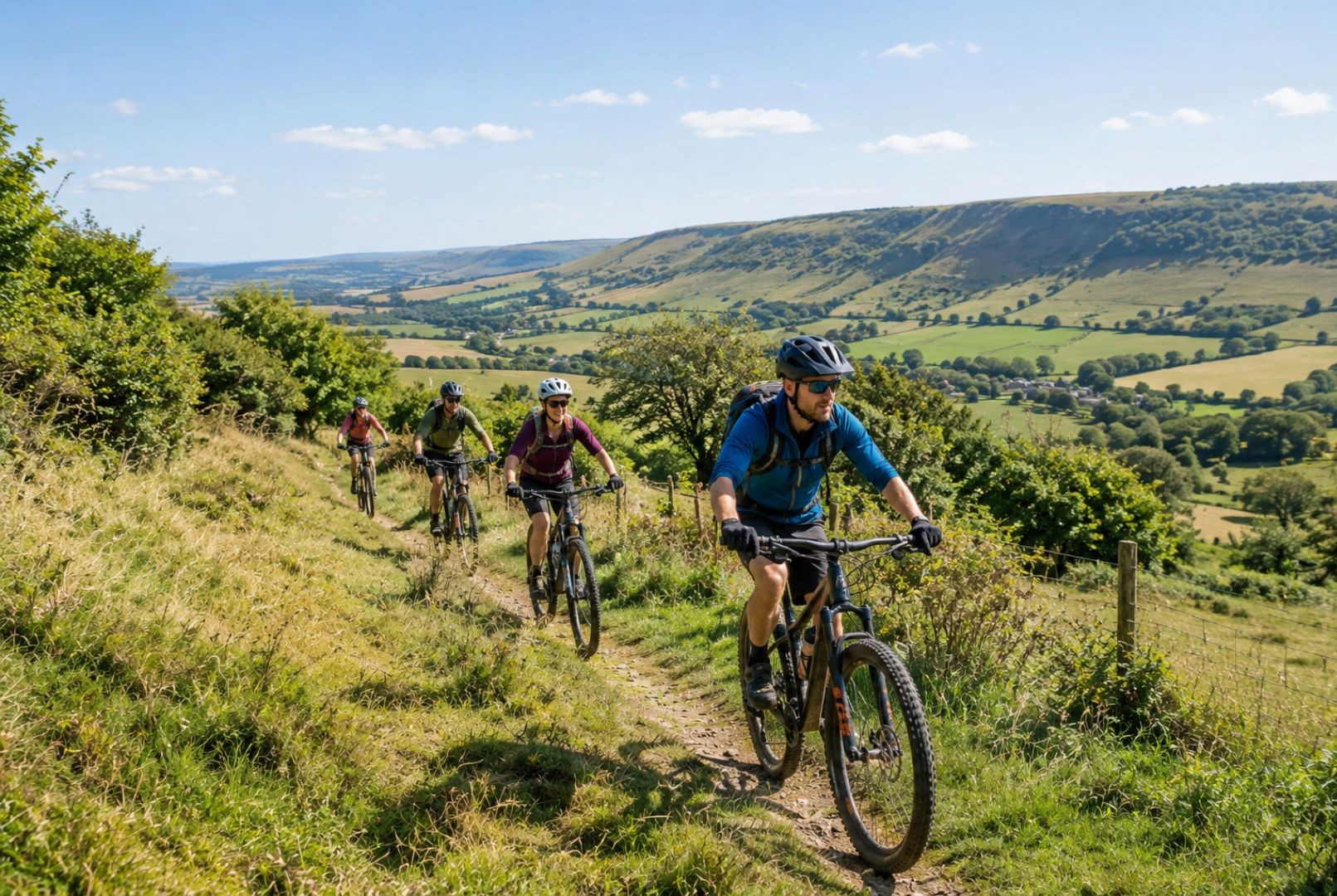
Hiking and cycling serve a different purpose. Not only do they offer the chance for exercise, but they also provide wider wellness benefits at the same time.
A hike or bike ride through the countryside can provide respite from the intensity of a conference session while offering the opportunity for conversations that might not happen around a conference table. In this instance, the value is less about achievement and more about creating space.
For leadership teams, consider assigning delegates to pairs or small groups and giving them a single question to discuss. This question can relate to work, or it can be aimed at allowing individuals to discuss topics and concepts aimed at expanding their understanding of their wellbeing or the environment. This is when the walk or ride becomes a facilitated thinking environment rather than simply an outdoor activity.
Off-road driving: energy and experiential engagement
Wellness does not have to mean calm. An event consisting entirely of quiet activities can become monotonous. For some groups, an energising experience may be more appropriate. The lesson for organisers is to think about contrast.
After all, excitement, fun and laughter are all important elements of holistic wellness. Activities such as off-road driving allows individuals to remove the mind from work issues entirely and sets them free to focus on a sole task.
Alternating periods of focus and recovery with movement and stimulation creates a more sophisticated delegate experience.
- Food as Strategy
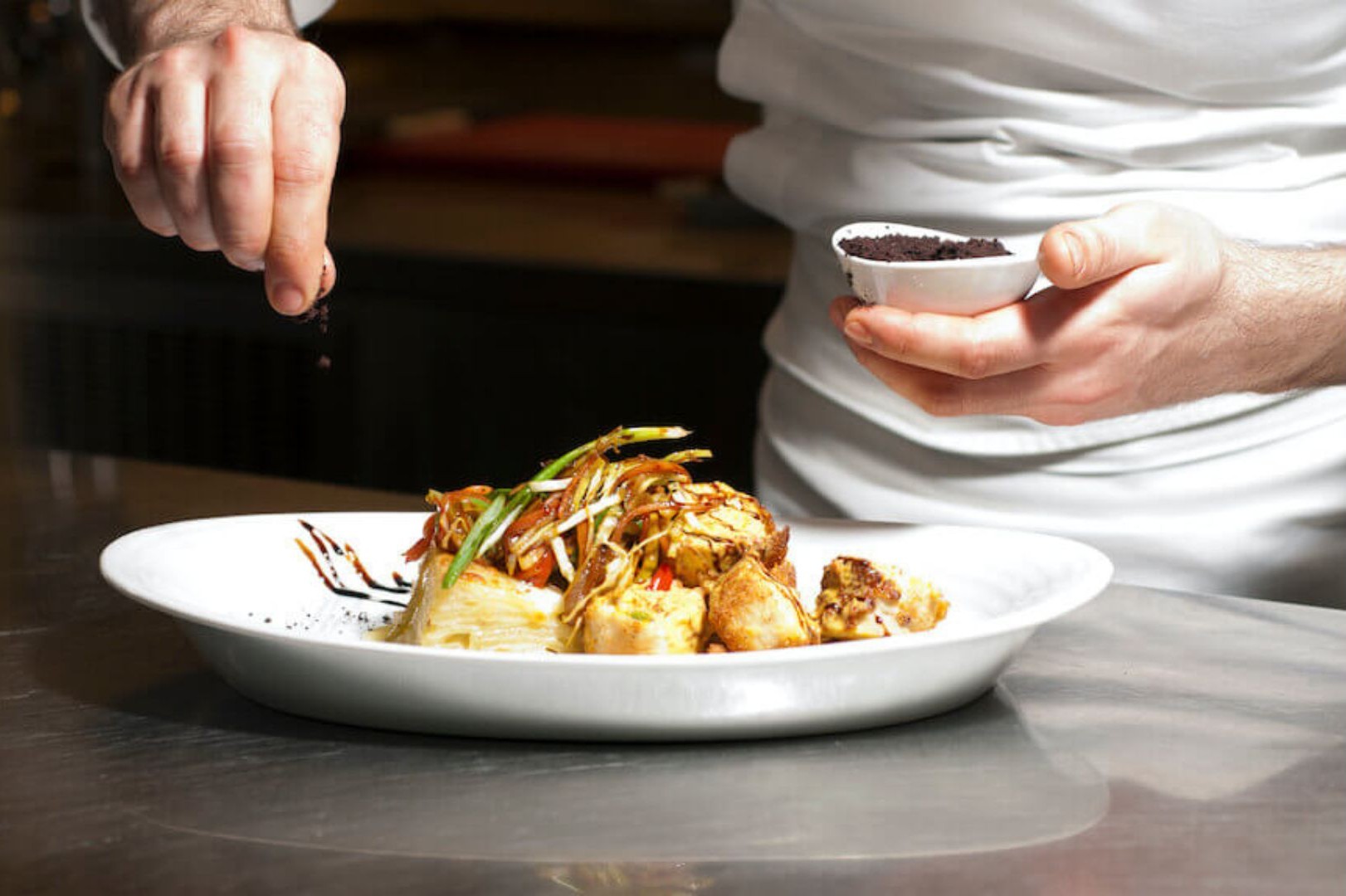
The role of catering in wellness is often oversimplified. The objective is not to make a corporate event feel like a health retreat. It is to understand how food affects the rhythm of the day, and to use menu options and ingredients which promote optimal performance for each one.
For a wellness-led event, there are two important principles. Firstly, offering choice rather than imposing restriction is crucial to ensure delegate engagement. And secondly, creating moments of enjoyment are as important and stimulating energy and focus.
Consider:
- Breakfast: nutritious, varied and substantial enough to support an active morning.
- Mid-morning: lighter refreshments rather than a heavy break.
- Lunch: fresh, seasonal food with a choice of lighter and more substantial options.
- Afternoon: avoid a menu that leaves delegates feeling sluggish immediately before a final session.
- Evening: transition from functional nourishment to hospitality and celebration.
- Permission not to Participate
One of the most important principles of corporate wellness is often overlooked: wellness should not become another obligation.
A delegate who does not want to attend a sunrise yoga session should not feel that they are failing to engage. Instead, provide parallel options. This is particularly important for multi-day events.
Wellness is ultimately about creating the conditions in which people can make better choices for themselves.

- Overnight Wellness
For multi-day corporate retreats, wellness should extend beyond the formal event hours and be embedded into every part of the event programme, including overnight.
Sleep quality plays arguably the largest role in recovery and general wellness. Hypoallergenic bed linen, high-quality toiletries, adjustable lighting, temperature controls, supportive mattresses should always be available to ensure delegates are as well rested as possible.
The objective is not to keep delegates busy from morning until night. It is to create right environment for the effective thinking and productive conversations throughout the entire event.
- A Venue that Facilitates Wellness
The most sophisticated wellness events do not look like wellness events. They look like exceptionally well-designed corporate experiences. The venue simply provides the physical conditions that allow the organiser to create them by ensuring that wellness is not an add-on; it is an embedded, strategic principle.
As a result, the future of corporate wellness events is unlikely to be defined by a particular activity. It will be defined by better questions.
- Where will delegates have the opportunity to recover?
- When will they move?
- When will they have uninterrupted time to think?
- Where can meaningful conversations happen?
- How much choice do they have?
- How will the environment influence their energy and attention?
- And what will they remember when they return to work?
For event organisers selecting a venue, these questions provide a more sophisticated framework for designing experiences. Whether the brief is a leadership retreat, corporate conference, incentive programme, team experience or client event, the best venues ensure that wellness becomes part of the reason the event succeeds, rather than simply another item on the agenda.
Wellness at Firle Events
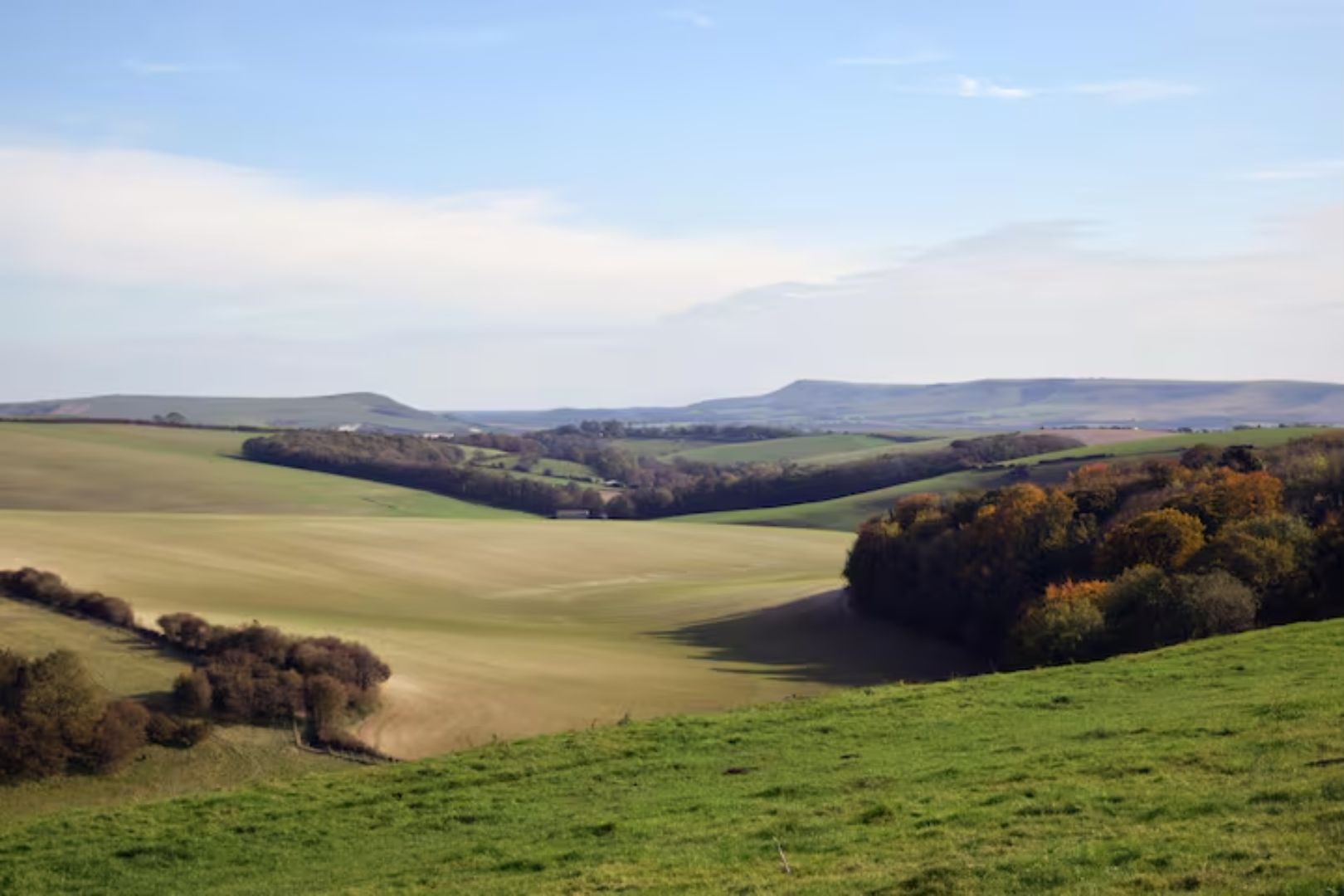
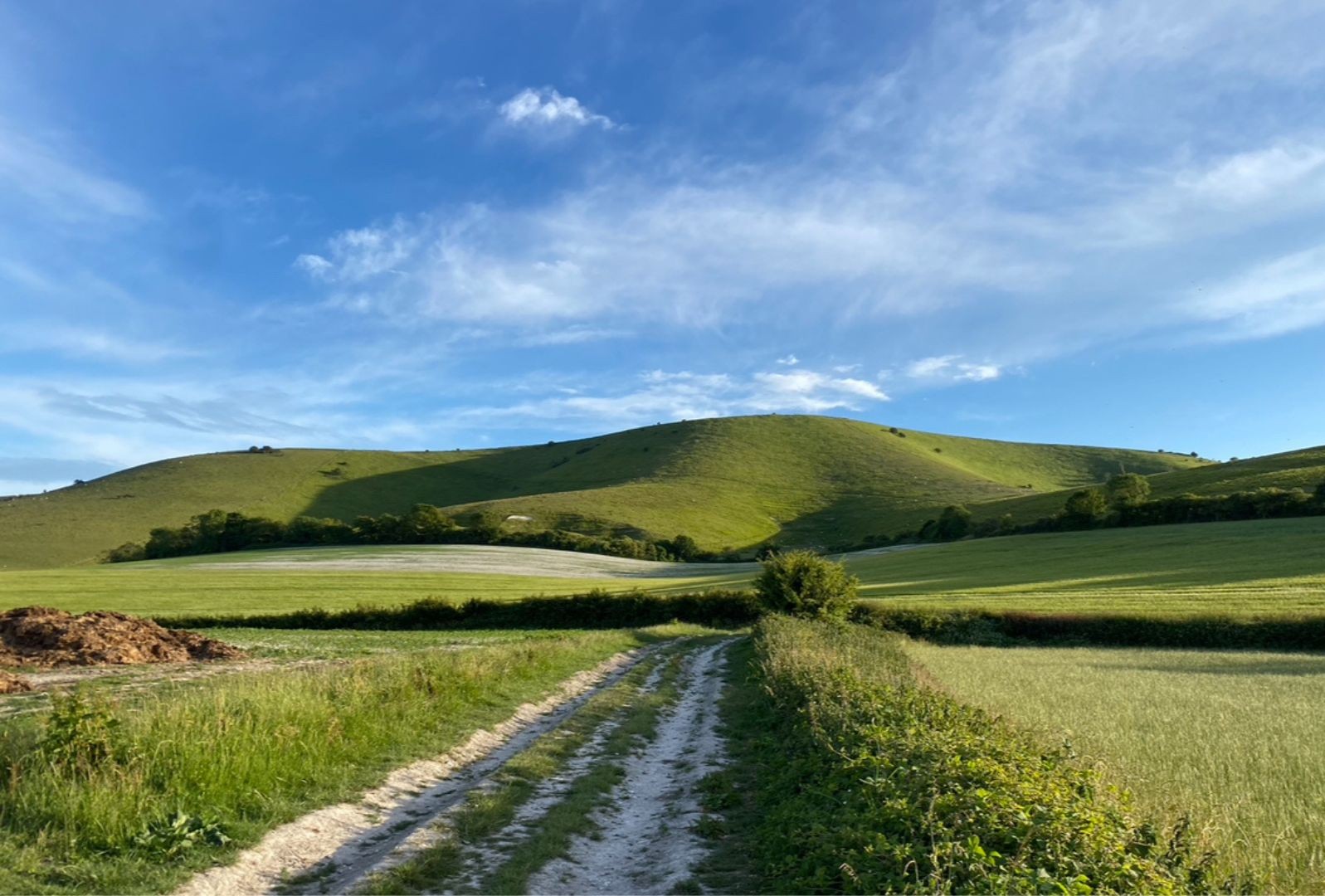
As can be seen from the sections above, the choice of venue is crucial when embedding wellness into a corporate event. This is where Firle is particularly distinctive due to its rare combination of versatile event spaces, historic interiors, gardens, parkland, woodland, and spectacular vistas.
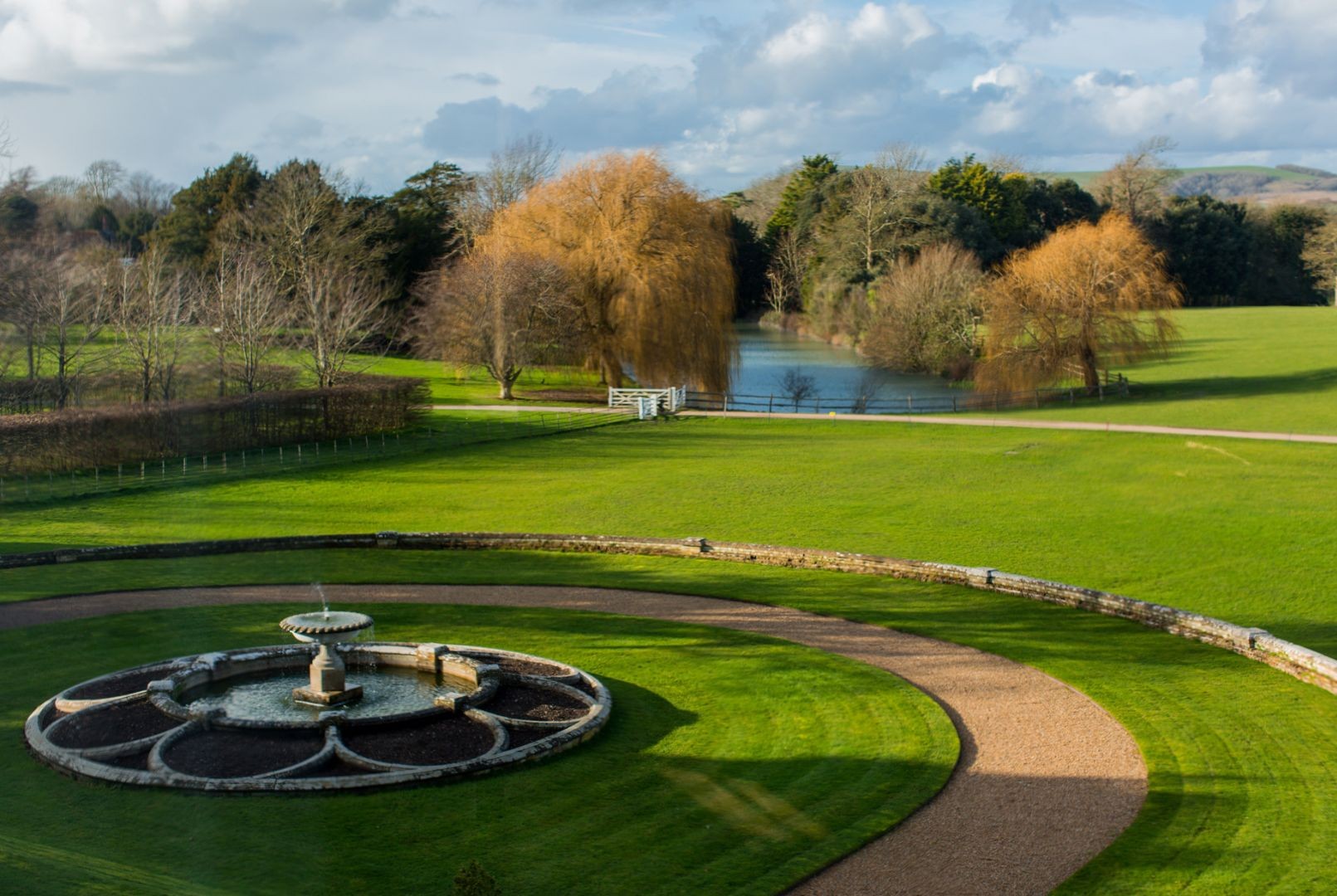
The Georgian Riding School can provide the scale required for larger conferences and corporate gatherings, while the Main House offers more intimate environments for meetings, dining and discussion. Beyond the buildings, the gardens, 300 acres of parkland and extensive trails open up an entirely different set of possibilities.
An organiser can move from a keynote beneath historic architecture to a walking discussion through the estate, from an outdoor team experience to a private dinner, without having to change venue.
The Arrival Experience at Firle
Previous events at Firle have utilised The Arrival Experience in several ways. For example;
- A guided walk through the gardens and park to help delegates relax and de-stress.
- A brief, curated tour of the house’s most important artworks to inspire discussion and creativity.
- A journey through an immersive exhibition of a company’s achievements to inspire the next generation of their team.
At Firle, the varied landscape and a historically significant house and collection makes it possible to create different experiences according to time available and delegate requirements.

Wellness Activities at Firle
Trusted wellness activities such as yoga, Pilates and meditation are available in various locations across the estate, allowing event delegates to improve their health while truly getting in touch with nature.
Firle’s unique setting also offers the opportunity to undertake a wide range of activities designed to promote health and social cohesion etc.
At Firle, the relationship between the main house, courtyard, gardens and wider grounds gives organisers the opportunity to create natural transitions between environments and activities.
Micro Recovery at Firle
Firle’s wide variety of event spaces, indoor and outdoor, and the scale of the wider estate makes offering opportunities for regular rest and recovery easy and practical.
Event programme’s can move delegates seamlessly between the grandeur and focus of Firle Place, the landscaped gardens, the parkland and the wider countryside. The transition itself becomes part of the experience, allowing individuals and groups to decompress and refocus whenever they require.
Nutrition at Firle
Firle’s catering approach can be tailored to the character and requirements of an event.
Utilising exceptional local ingredients and a network of specialist suppliers, each bite is designed to promote recovery, energy, and delegate delight.
Whether it’s energising breakfast buffets, nutritional lunches, or unforgettable evening banquets, the skill of our chefs and the incredible ingredients at their fingertips ensure wellness is infused throughout.
Overnight Wellness at Firle
Firle Place has ten exceptional bedrooms within the main house, complemented by a range of accommodation options across the wider estate. This creates the possibility of designing an event as a genuine retreat rather than simply a conference with accommodation attached.
With everything from the bed linen to the toiletries and in-room conditions optimised and tailored to rest and recovery, staying at Firle ensures Wellness is integral to the entire experience.
At Firle, the combination of heritage, privacy, hospitality and an exceptional natural environment provides the canvas for events with wellness at their core.
If you are planning a corporate event and would like to explore how the spaces, landscape and activities at Firle could be used to create a more thoughtful and engaging delegate experience, speak to the Firle events team about private hire and bespoke event possibilities.