



Biodiversity in Firle
Thriving biodiversity in Firle and the health of the region’s landscapes is of utmost importance to Firle Estate. A core tenet of Estate policy is to improve the condition of existing priority habitats to create a 30%+ uplift in biodiversity, aligning with the ambitions of the South Downs National Park.
Protecting and ensuring soil viability for the future is a key priority of this policy. Firle Estate works with farmers and land managers to implement regenerative practices. These include use of cover crops, companion cropping, conservation tillage to promote soil formation and stabilise existing soils to make them more resilient.
Special Scientific Interest
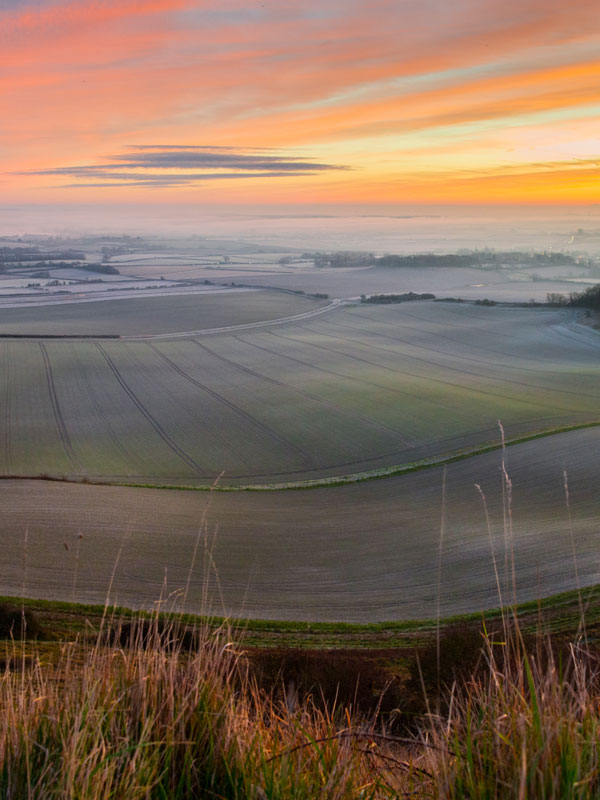
The Firle Escarpment Site of Special Scientific Interest (SSSI) is designated for its lowland calcareous grassland. This nationally rare habitat comprises 228ha of the Estate, 193ha of which forms the SSSI. The SSSI is home to a number of critical indicator species and rare or endangered species, including round headed rampion Phyteuma orbiculare and the protected early spider orchid Ophrys sphegodes. This means there is a responsibility to maintain this seedbank.
Currently, the site faces the significant challenge of the encroachment of scrub and tor grass. To address this, the Estate aims to work with our farmers to support scrub control measures and improve grazing.
Symbiotic Focus
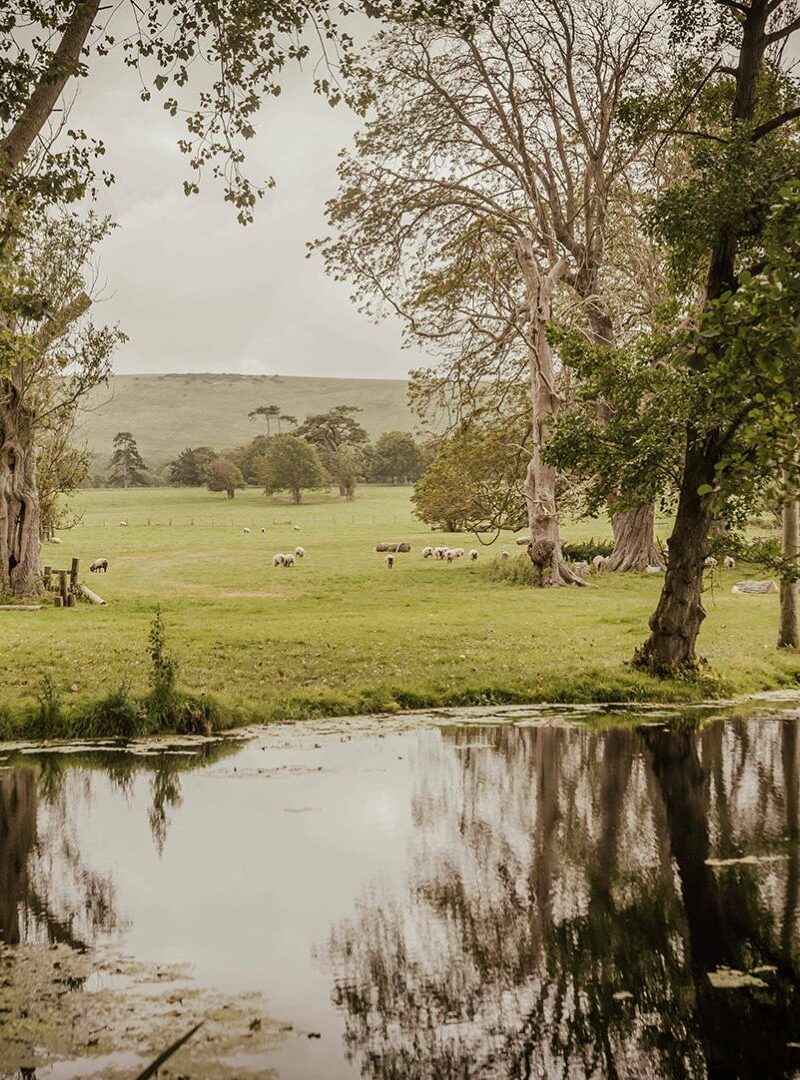
Firle’s chalk base is also extremely important for water cycling. Acting as a filtration system for nutrients leaching into the aquifer, it substantially benefits water cycling and biodiversity. Maintaining this chalkland is a key focus on Firle Estate, both now and in the future.
The Estate has several other biodiverse priority habitats alongside the Lowland Calcareous grassland. These include including 8ha of Lowland meadows, 30ha of flood plain grazing marsh, a traditional orchard and 137ha of woodland.
Without the critical interventions of Firle Estate and its skilled and committed farmers. ecosystems would not function effectively.